
Peat Free Compost

...as good for your plants as it is for the environment!!

Choose your peat-free compost

Peat-free means made without peat, not one recipe for every job.

  • Use a formulated growing compost for pots and containers.
  • Use a soil improver to enrich garden soil.
  • Acid-loving plants need a suitable ericaceous compost.

Check each product page for its uses, pack sizes and current availability.

For pots & planting

Formulated peat-free multi-purpose compost for general potting and planting out.

View multi-purpose compost & pack sizes

For fruit & vegetables

Ready-to-plant peat-free growing compost for fruit and vegetable plants. Use a specialist seed compost for seeds and young seedlings.

View vegetable compost & pack sizes

For improving soil

PAS100-certified Organic Garden Compost for digging into soil or mulching. A soil improver, not a general-purpose potting blend.

View soil improver & pack sizes

What Is Peat Free Compost?
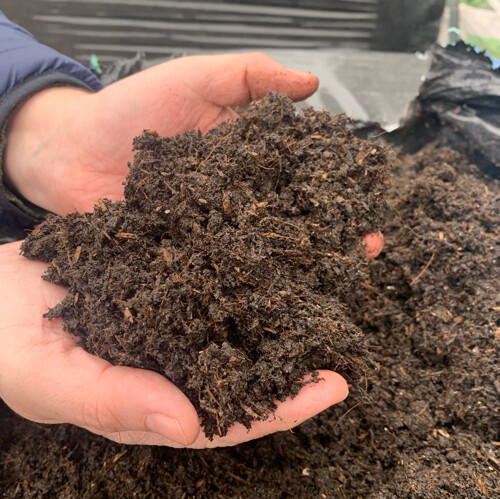
Peat Free Compost

Peat free compost is a totally natural and eco-friendly compost which is made from peat alternative products.  It has taken many years to find the best peat alternative ingredients, however modern day peat free composts are now out performing tradional peat based compost.  

In switching to peat free compost you are not only reducing the destruction of peat beds which have taken many hundreds and thousands of years to form, but in most cases you are also reducing landfill as many peat substitues are in fact recycled products.

View Our Range of Peat Free Composts

How is Peat Free Compost Made?

One substitue ingredient is PAS100 compost, made from botanical and forestry cuttings, which are first shredded to increase the surface area of the particles to speed up the composting process. The shredded material is then placed in rows where the naturally occurring bacteria begin breaking down the material.

The rows are turned several times during the process to ensure thorough and even decomposition of the material. After 12 weeks of composting and constant monitoring, the material is screened to remove any over sized woody fraction and leave only the fully composted, nutrient rich and natural peat free compost.

Other peat alternatives are; Coir (shredded coconut husk - a bi-product of coconut farming), Woodfibre (made from timber unsiutable for use in construction) and composted bark fines.

Using Peat Free Compost

Peat free compost is very a versatile product that can be used in many ways around the garden. Here are some common ways Peat Free Compost is used in our customers projects:
  • Peat Free Multi Purpose Compost - There are many peat free multi purpose and all prurpose composts available, which have been specially formulated for all uses in the garde, from seeding to potting and planting.

  • Soil Improver - simply add the peat free compost to your gardens topsoil to increase fertility, moisture retention qualities and increase soil temperatures.
  • Feeding Mulch - Spread a layer of peat free compost (4cm to 8cm) over your flower bed soil, this will stop the weeds growing through, reduce moisture loss and feed the soil and plants all in one operation.
  • Shrub and Plant Compost - Dig the hole for the plant or shrub and line with peat free compost before planting. This will increase moisture retention around the roots, feed the plant and increase root establishment.
  • Lawn Top Dressing - The finest screened peat free compost can be used as a top dressing to feed your lawn and at the same time it will keep your grass greener during drought and dry periods, reducing the need to water.
  • Turf Laying - Trials have shown that peat free compost decreases the time it takes for newly laid turf roots to knit with the prepared topsoil, therefore speeding up lawn establishment and reducing the "watering in" period. Simply apply a layer of peat free compost approximately 20mm thick to the prepared topsoil and rake in prior to laying turf.

Benefits of Peat Free Compost

Organic matter in soil is essential for soil structure, water holding properties, microbial activity and soil health. Composts can be used to add organic matter to soils and increase the production of soils through many benefits:

  • Reduces the need for inorganic fertilisers - Peat free compost is a valuable organic source of the nutrients commonly found in inorganic fertilisers. Nitrogen, phosphate, potash, magnesium and sulphur (as well as trace elements) all occur naturally in compost, in quantities that can be extremely valuable.
  • Can increase yield - modern plants and crops need to establish rapidly in order to thrive. To do this, they depend on very high levels of organic matter in the soil. Tests prove that adding fertiliser is no substitute for this organic matter. Peat free compost not only provides fertilisation, it is high in organic matter.
  • Improves soil structure - it's been proven that peat free compost improves the aggregate strength of soil. It also allows root systems to penetrate more easily, enabling them to find nutrients and water more effectively. Adding peat free compost improves workability too, and makes soil less likely to compact under heavy farm machinery - meaning it can be used more frequently.
  • Raises water retention capacity - soil rich in compost absorbs and retains water better. This means it needs less irrigation, which reduces overall consumption.
  • Reduces soil erosion - wind and rain can erode soil, particularly when it contains low levels of organic matter. Peat free compost can be applied generally to solve this problem, or deployed in areas of particular concern.
  • Contains valuable micro-organisms - micro-organisms do three good things to soil. Feeding off the organic matter in peat free compost, and teaming up with the micro-organisms already present in the soil to which they've been added, they release polysaccarids and humic substances that help improve soil structure. They release nutrients in organic matter and make it available to plants and crop to use as food. They can suppress soil bourne plant pathogens.
  • Reduces cost - peat free compost improves soil quality which leads to better plants and crops that need less irrigating, that are easier to cultivate and need less fertilising. It is difficult to put a finite cost on this benefit but growers and horticulturists definitely notice the difference.

Analysis

Our Organic Garden Compost soil improver is described on its product page as Quality Compost Protocol and PAS100 certified. PAS100 covers the production and quality of composted materials, including controls on raw materials, monitoring and testing.

Peat-free potting composts can use different ingredients and formulations: being peat-free does not by itself mean that every finished compost is PAS100 certified. Check the individual product description for its stated uses and certification. If you need analysis information for a particular product, please contact us.

Where Can I Buy Peat Free Compost?

Buy peat-free compost online for potting, vegetable growing or improving garden soil. Choose the formulation for your plants and the job, rather than treating every peat-free product as interchangeable.

Compare the peat-free choices above, including formulated potting composts and our Organic Garden Compost soil improver. Check each product page for current pack sizes and availability.